Football, Copenhagen and Collages
A couple of years ago, Jon Pilkington made the decision to mix two of his greatest passions. As a lifelong Liverpool fan, he’d travelled the world to watch the team and, as a painter, he’d built a successful career as an artist. In 2019, it was time to introduce his love of football into his work. The result was the beginning of “footy paintings” as Pilkington calls the works that mix his life away from the studio with the work he creates within it.
“It took me a long time to get to the point where it felt like the right time to make footy paintings,” he says. “It was hard because I’m so close to footy, so I didn’t want it to become too cliche. I think I did it in a good way, looking back at it from a historical perspective, focusing on the links like the materiality of the old leather caseys and the heavy shirts, translating these black and white archive images into something very contemporary while still retaining this untouchable snapshot in time. Footy is something that helps me switch off from painting and vice versa, so it’s funny when you start to intertwine them.”
Nowadays, you can see the football influence on Pilkington’s work. Some of his pictures have reference the history of the FA Cup, with the silhouettes of footballers taken out of context, while more recently he has worked with cult Copenhagen team Boldklubben af 1893 – or B.93 as they’re more often known – on limited edition home, away and third shirts. While football may be a relatively new theme in Pilkington’s art, it also takes it back to where it all started.
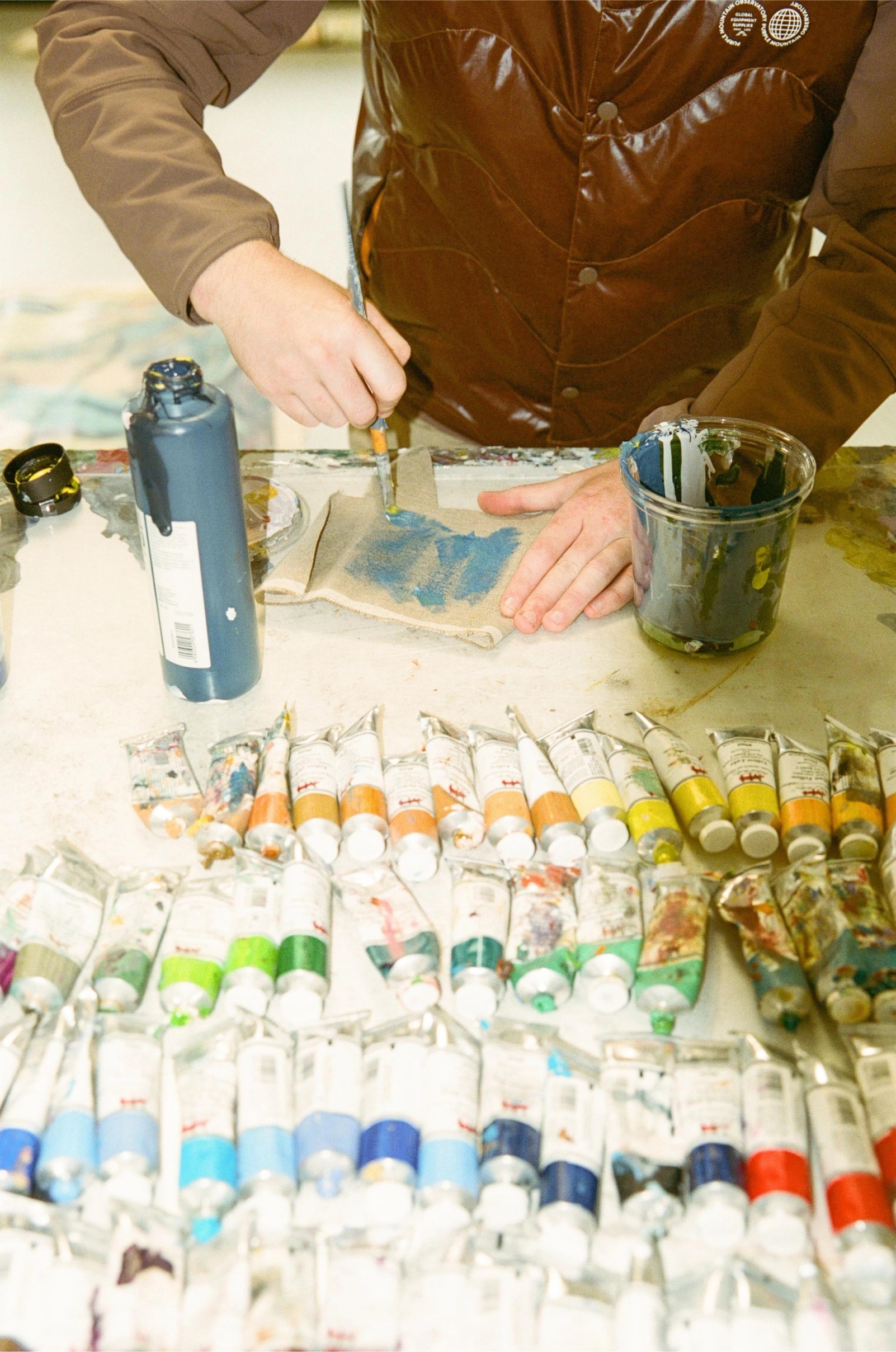
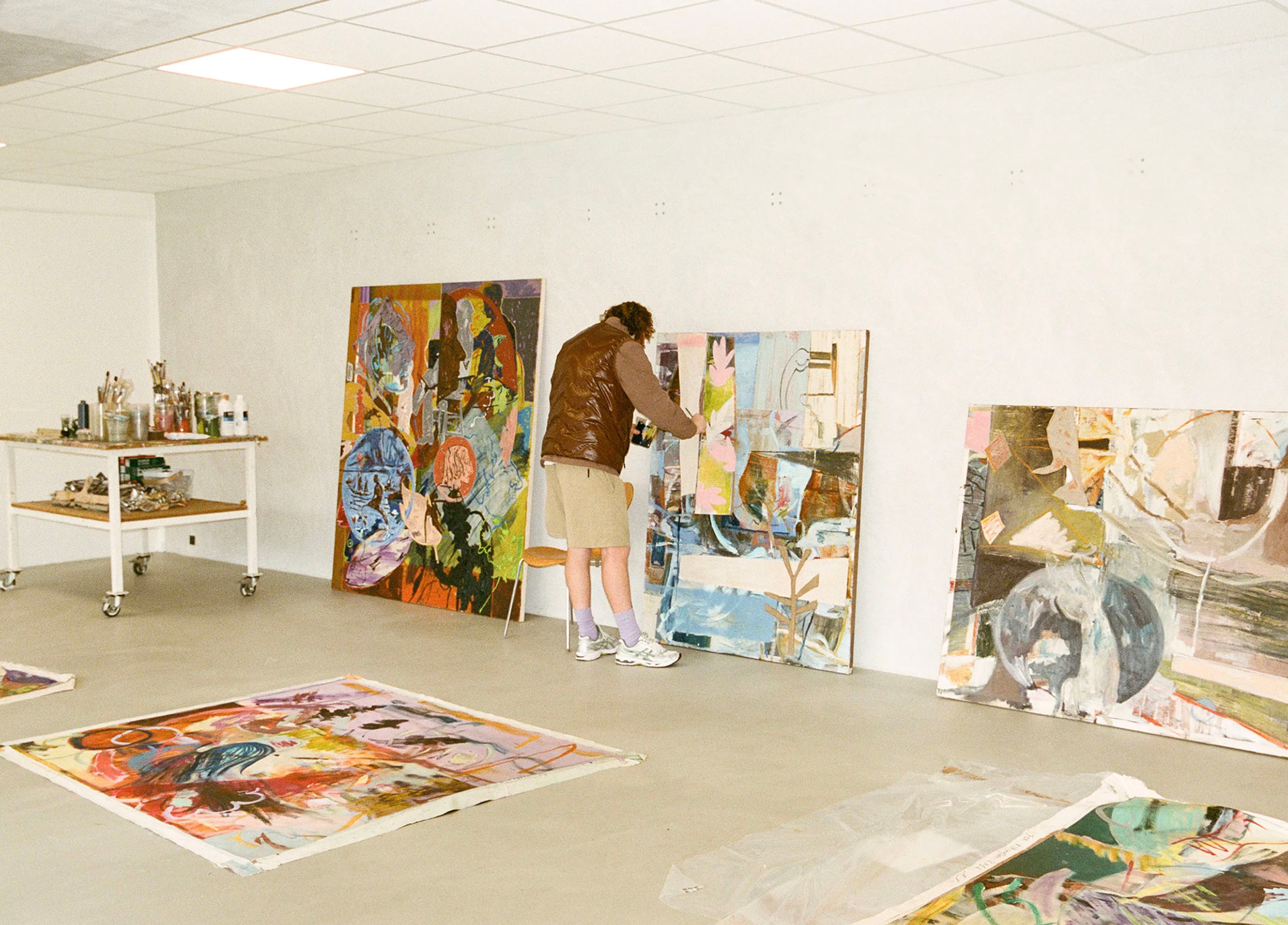
“I screwed up my A Levels in subjects I wasn’t interested in,” he remembers. “But I loved drawing footy badges, that was my angle, so I enrolled on a foundation in art. The head of the course took a chance on me, and I’ll forever be grateful for that. I had really good tutors who pushed me in a much more painterly direction.”
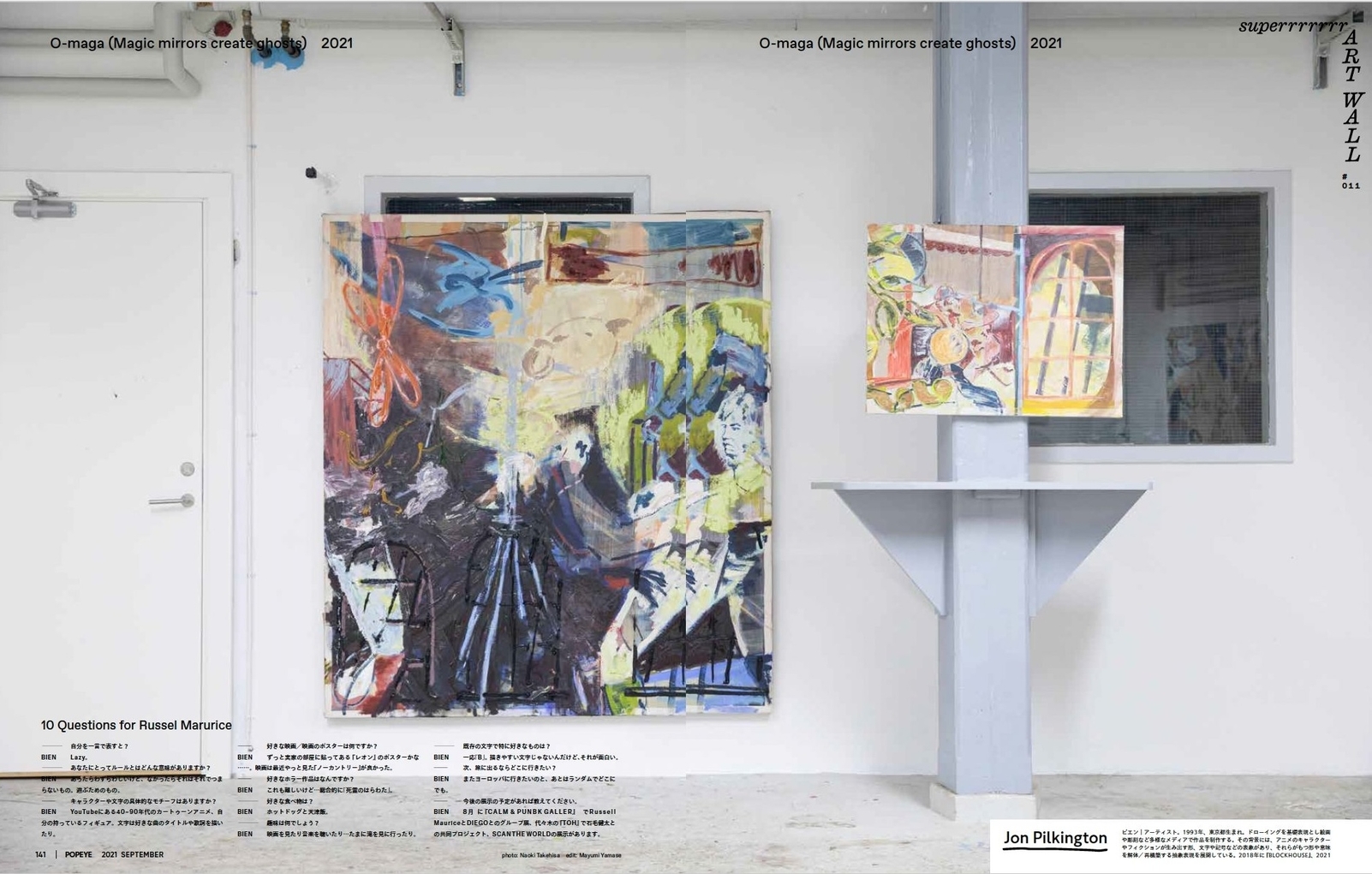
Following that more painterly direction, Pilkington’s work has come a long way from his drawings of football badges. Now, he describes his work as “collage paintings, playing on space and form, distorting perspective and distance.” To create this effect, Pilkington’s approach involves mixing together various references and influences. “They are informed by past histories, ultimately trying to weave lots of narratives into one pictorial space,” he continues. “The idea of no specific narrative whereby the viewer can ultimately make their own decisions about how to navigate the paintings. They are informative without being prescriptive.”
“The idea of no specific narrative whereby the viewer can ultimately make their own decisions about how to navigate the paintings. They are informative without being prescriptive.”
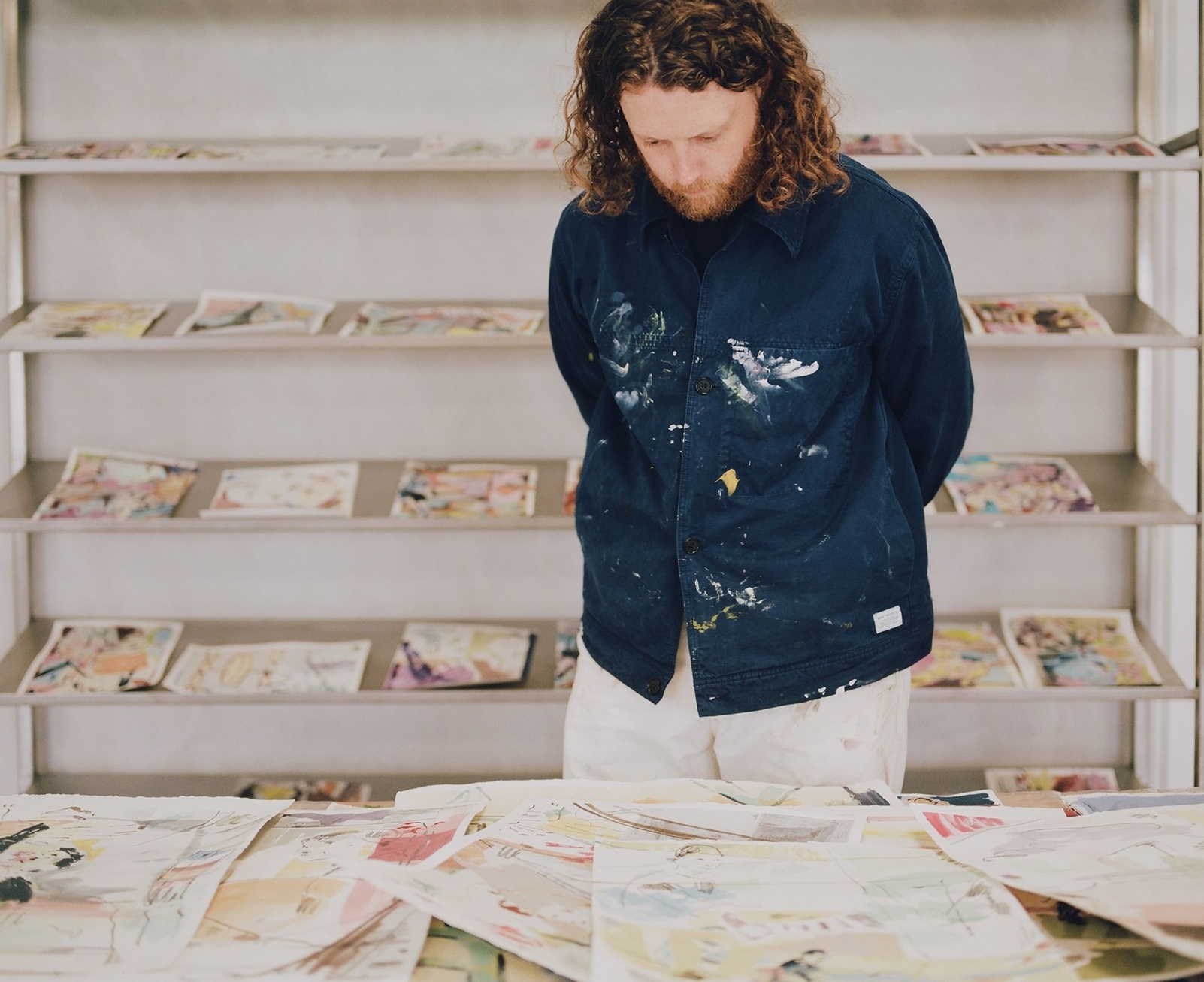
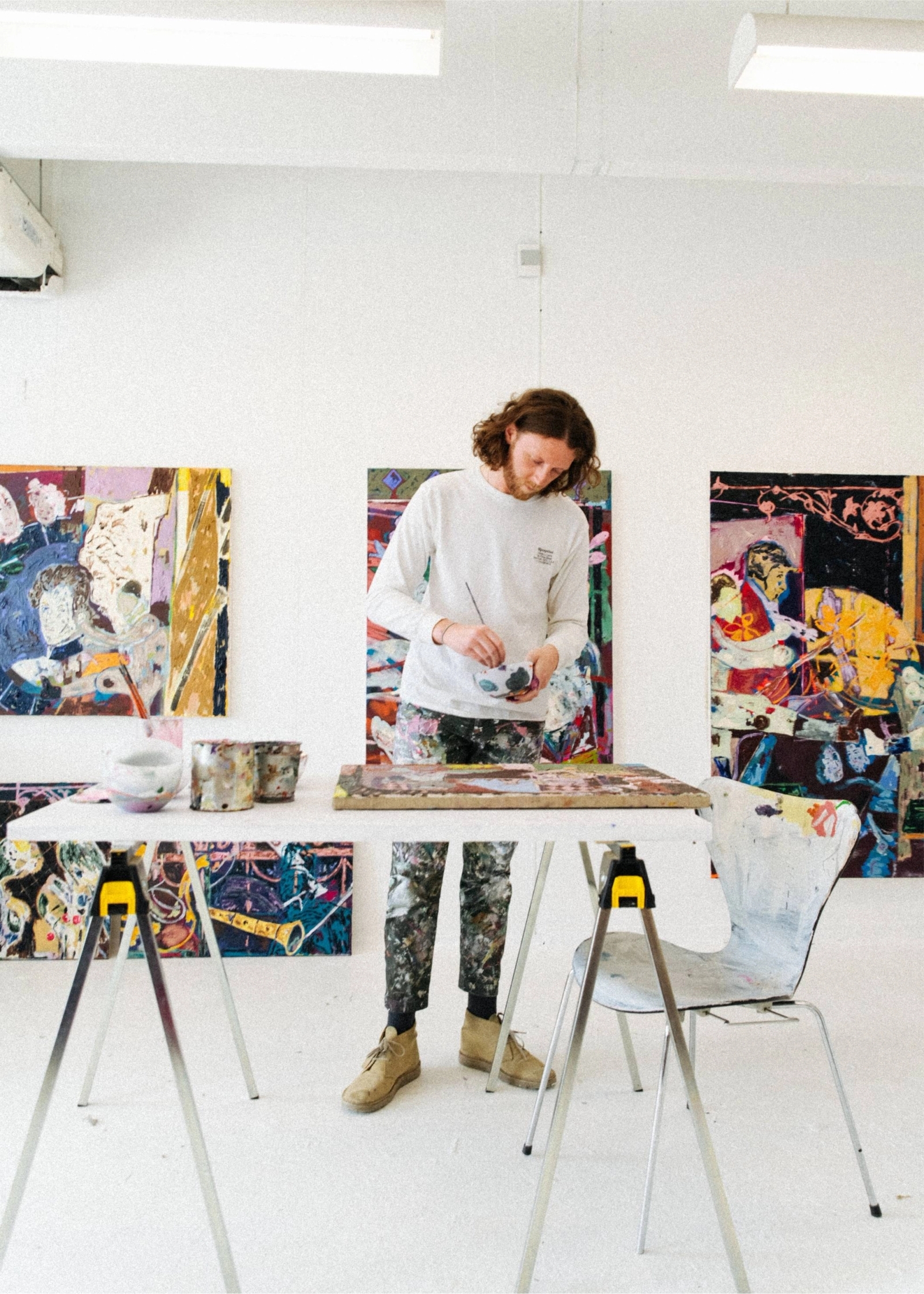
Pilkington’s work has contrasting elements to each picture, fragments of characters, motifs and recognisable imagery overlaid with different sections and different colours. This gives the work its collage-like look, made up of different ideas rather than different materials. Creating this work, Pilkington’s artistic process is broken into stages. “It starts in a very drawing-based way, knocking things in and then taking them out, building and destroying,” he says, “I repeat this until it works.”
For his collage style, Pilkington looks to a wide range of influences for each work. There’s football, obviously, but there are also a diverse mix of other artists. “Normally, I gravitate towards works or artists who make things that are in no way related to my work or things that I would love to be able to make but just don’t have the skill set for,” he explains, mentioning the works of RB Kitaj, Michael Landy and Jockum Nordstrom in particular. “But I wouldn’t say it was inspiration I look to these artists for, I think it’s more about transportation and how these artists can take your mind away from reality.”
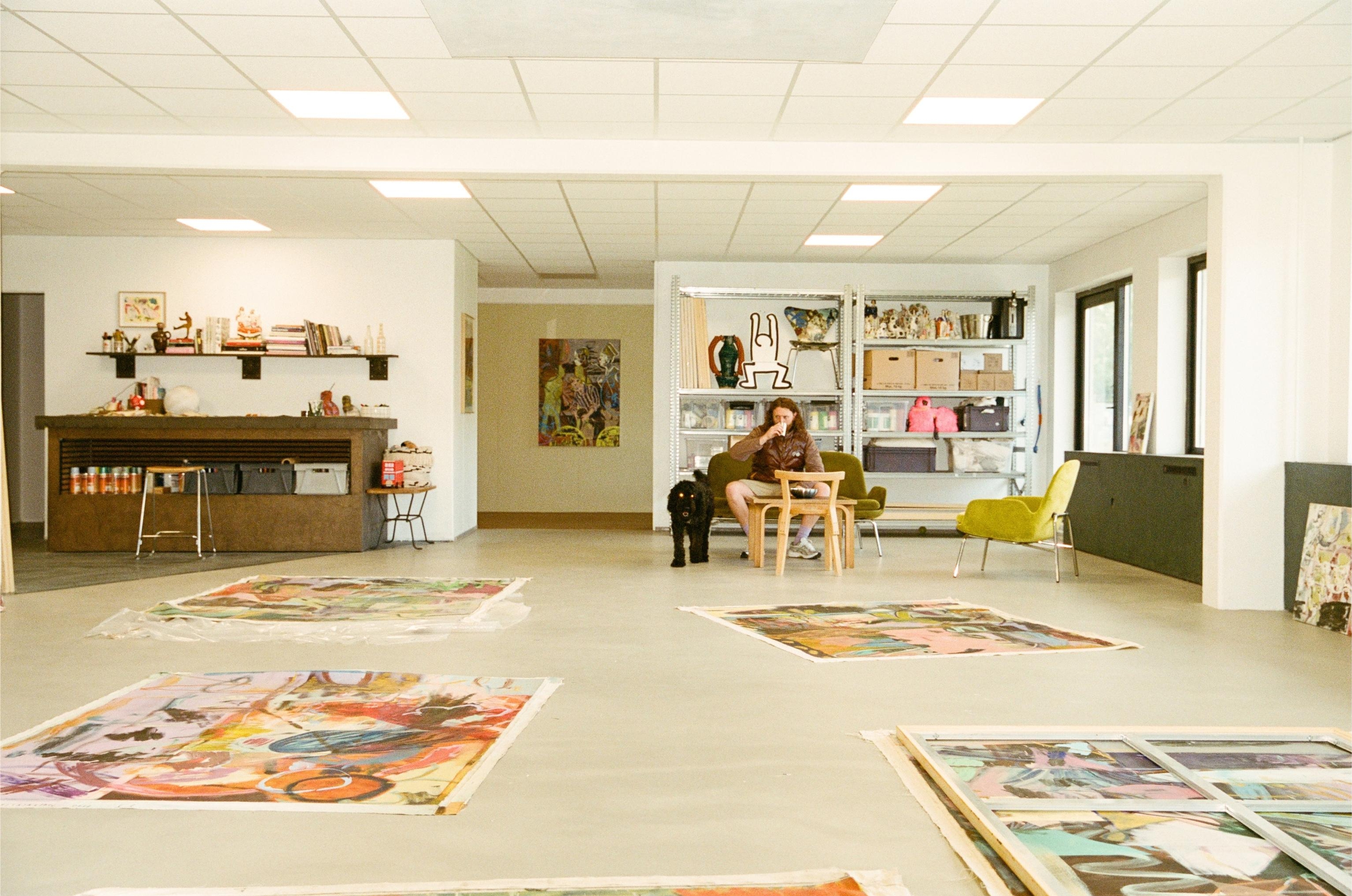
As well as introducing football to his collage-like works over recent years, there are other ways that Pilkington’s art has changed. For a start, he’s based in Copenhagen now, a long way from growing up in St Helens before moving to London. Pilkington first visited the Danish capital for an exhibition a decade ago, instantly falling in love with the city. “It gives me something I never had when I lived in London,” he says. “It gives me time, or at least the feeling of time. Days feel longer, it feels like the pace suits the way I work.” Pilkington has a very specific way of working, making quick decisions before sitting with it and waiting until he introduces another element. In this sense, the pace of Copenhagen is a perfect compliment to Pilkington’s process.
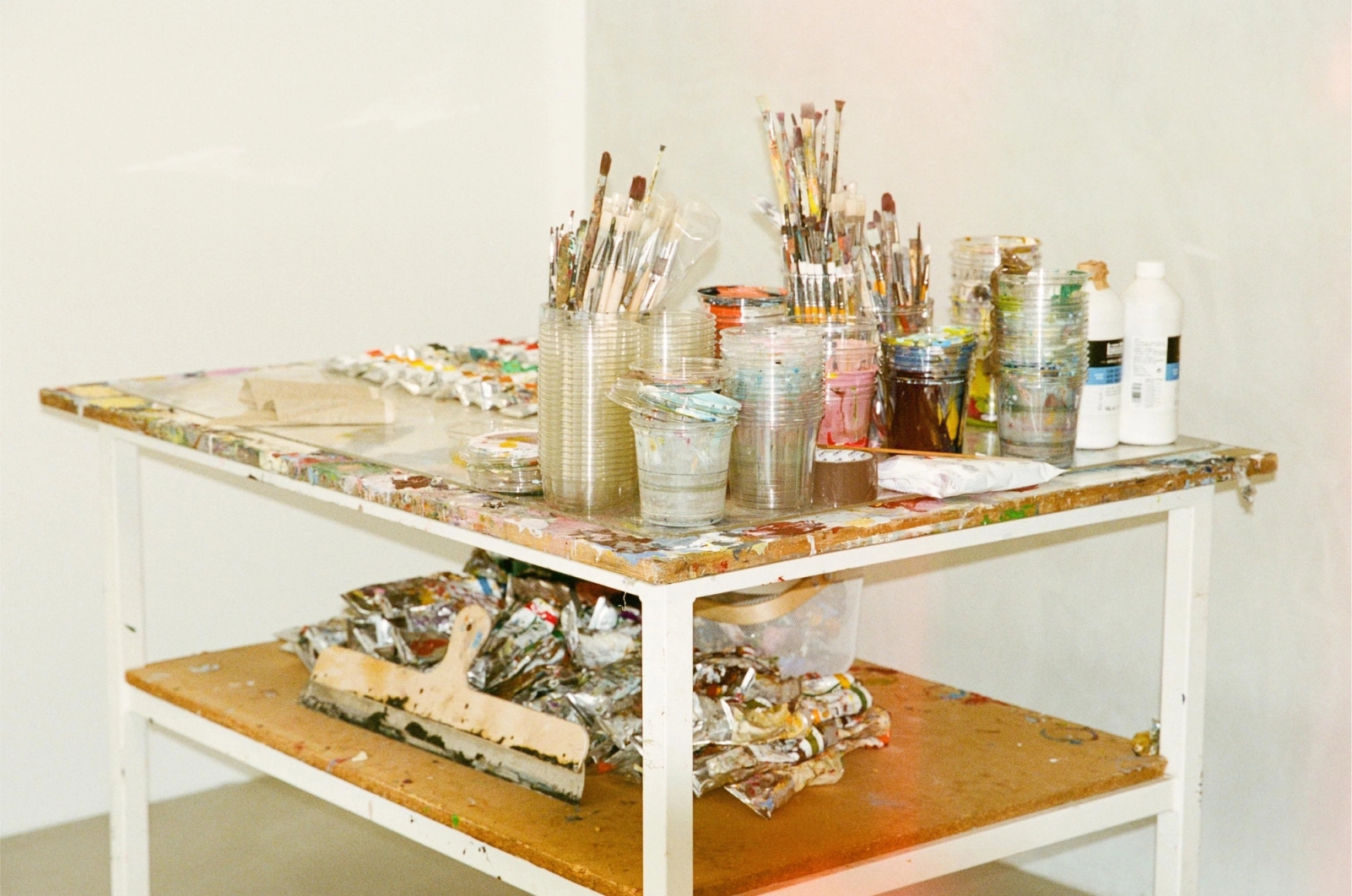
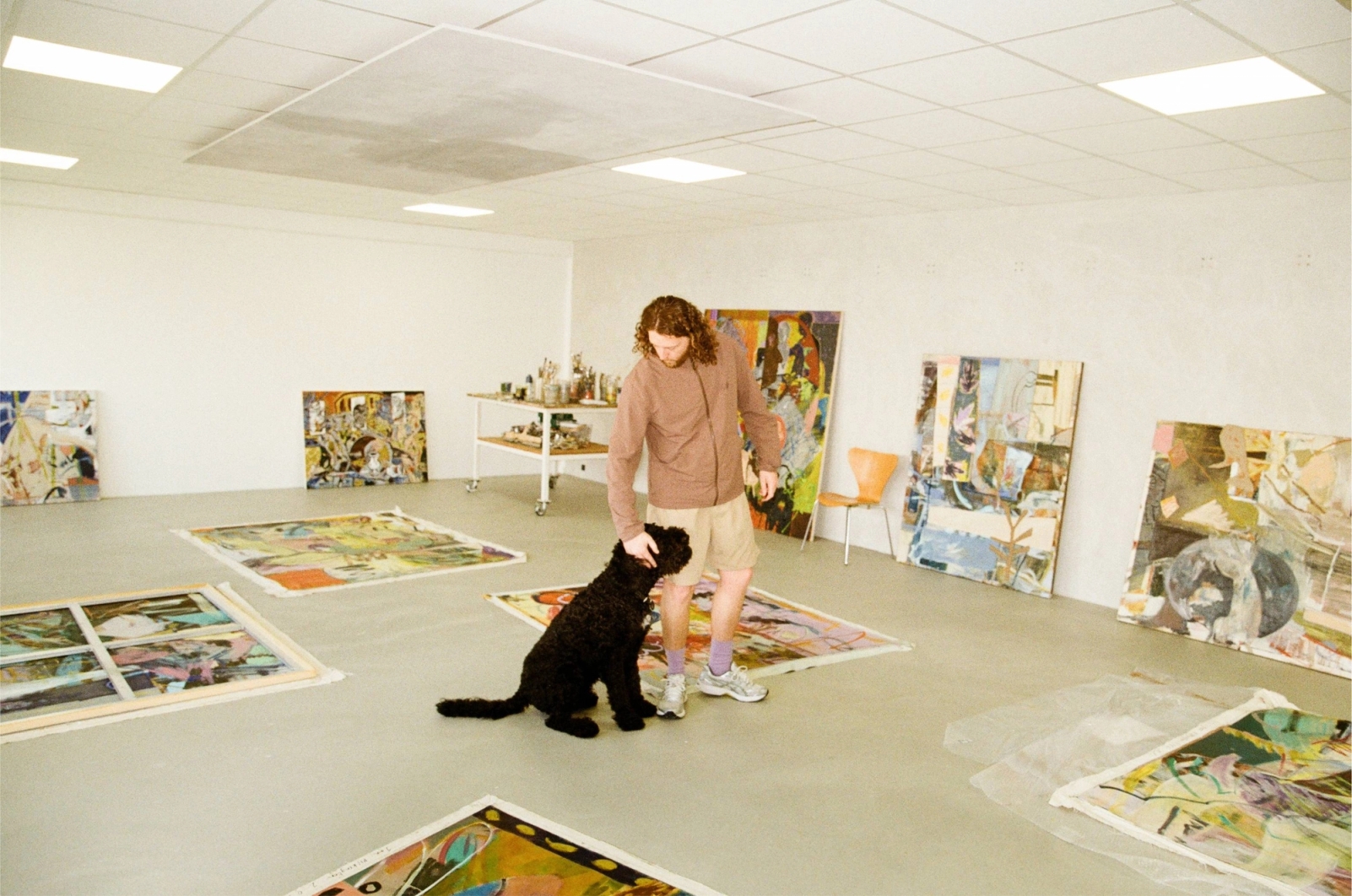
Another major shift in Pilkington’s art is in terms of the style itself. “It’s gone from a very simple drawing-based practice with graphite on paper to these huge, multi-faceted laboured oil works which are much more open and playful,” Pilkington says. “I think over the years it’s become much more confident in many ways. The more you know and the more you hone your craft, it’s about trying to keep those very stupid or playful ideas close, because your hand can know itself too well. I’d say at the moment I’m trying to shift things in a new direction, building on all the tricks I’ve learned but also being selective with those. Trying to figure out what I’m painting is most interesting to me.”
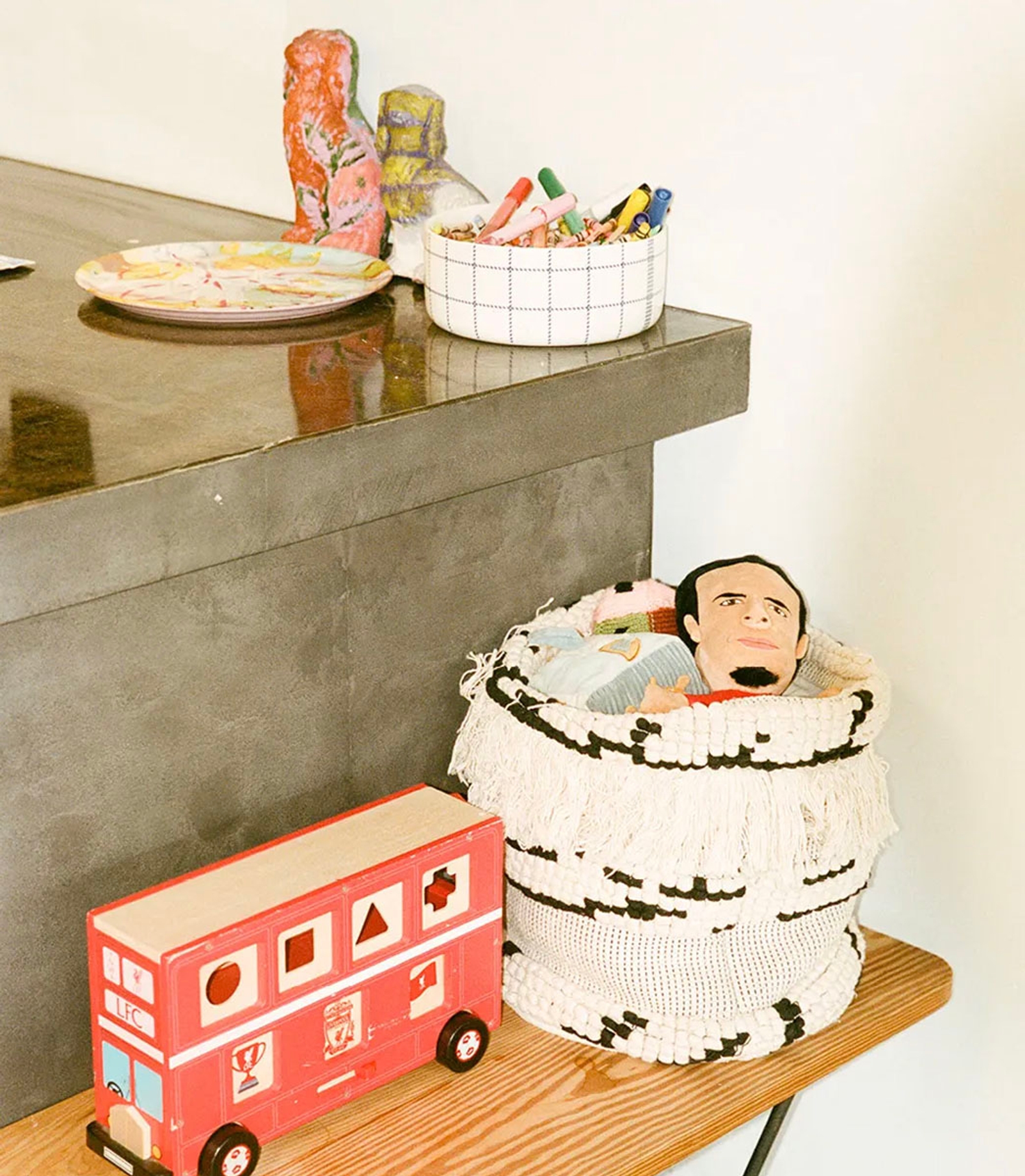
At the moment, Pilkington is continuing to push his art in new directions. He’s been hosting plate-painting workshops at his studio, he’s been experimenting with works on paper and he’s acclimatising his 10 month old daughter to life in the studio. “I’m going through a real drawing phase at the minute, quite a playful phase pushing around a lot of things on paper on a small scale,” he says.
“I’m excited to see where these are going and how it’s going to feed in to the larger works. The main thing is to keep pushing things creatively, to take some risks and to stay open to new things that creep into my work. And to make my daughter the next big thing in painting. Nepotism begins at home.”